Service companies: linking requests, projects and invoices
Requests in email, projects in a spreadsheet, invoices somewhere else: how FlexiERP links one client record to its project, each delivery and the invoice.
A client calls to ask where their request stands. The project manager digs through his inbox and cannot say whether the promised delivery went out, because a colleague sent it from his own mailbox. Meanwhile the accountant is preparing this month’s invoices from a spreadsheet that people fill in when they remember to. At month end someone asks whether phase two of the project was ever invoiced, and nobody wants to answer without checking.
In an agency, an integrator or an IT services firm, this is an ordinary week. The work itself is done well. What gets scattered is the record of it.
Four tools, four versions of the same client
Sales keeps contacts in one tool, projects live in another, deliveries sit in email threads and invoicing happens in the accounting software. The same client exists four times, with addresses that do not always agree and a tax identifier that is current in only one place.
The real cost sits in the gaps between those tools. A request accepted over the phone never reaches the project. A partial delivery is not passed on to accounting, so the invoice goes out for the full amount, or does not go out at all. A director who wants to know which projects make money has to pull several exports and cross-check them by hand, which is the kind of job that keeps getting postponed.
One client record, and a project that holds it together
In FlexiERP the client has one record, read by sales, accounting and management alike: contacts, addresses, payment terms and identifiers (ICE, IF, RC). Upstream, the CRM follows opportunities through a pipeline, from first contact to a quote won or lost, with the source of each prospect and the reason when a deal is lost.
An accepted quote becomes a sales order, and that order can be linked to a project. For a service company this is often the change people notice first. Orders, delivery notes, invoices, and even purchases made for that client, attach to the same project. When deliveries are spread over several months they all share it, and the real margin is worked out from the revenue and the costs attached to the project, with no spreadsheet in between.
Invoicing what was delivered
Every delivery is recorded in the application, with its date, what went out and the document it came from. An integrator shipping hardware uses the delivery note, which takes the items out of stock and becomes the basis of the invoice. For a service, the invoice is created from the order, for the part that has been carried out.
Each sales order shows the percentage delivered and the percentage invoiced. The phase two question is answered on the order screen, and whatever has been delivered but not yet invoiced can be looked up at any time instead of turning up at closing.
If your billing has rules of its own, such as an annual maintenance fee, a fixed price split into stages, or a clause that belongs to one contract, they can be built as extensions around the core, defined with your teams during the workshops.
An invoice born from the delivery, ready for e-invoicing
In Morocco an invoice already has to carry the seller’s and the buyer’s ICE, VAT shown separately and a number from a continuous series (article 145 of the tax code, the CGI). The DGI has announced electronic invoicing in which each invoice would be checked by its platform before reaching the customer, pending its decree, which will also set the calendar. An invoice retyped from a spreadsheet, with a missing ICE or an amount that does not match the delivery, is then likely to be stopped at that check. In FlexiERP the invoice is created from the order or the delivery, with the client record, VAT from the tax template and its numbering series. The application keeps that data structured and complete, and FlexiGlob sets up the connection with the tax platform as part of the deployment, once the format is published.
What management sees
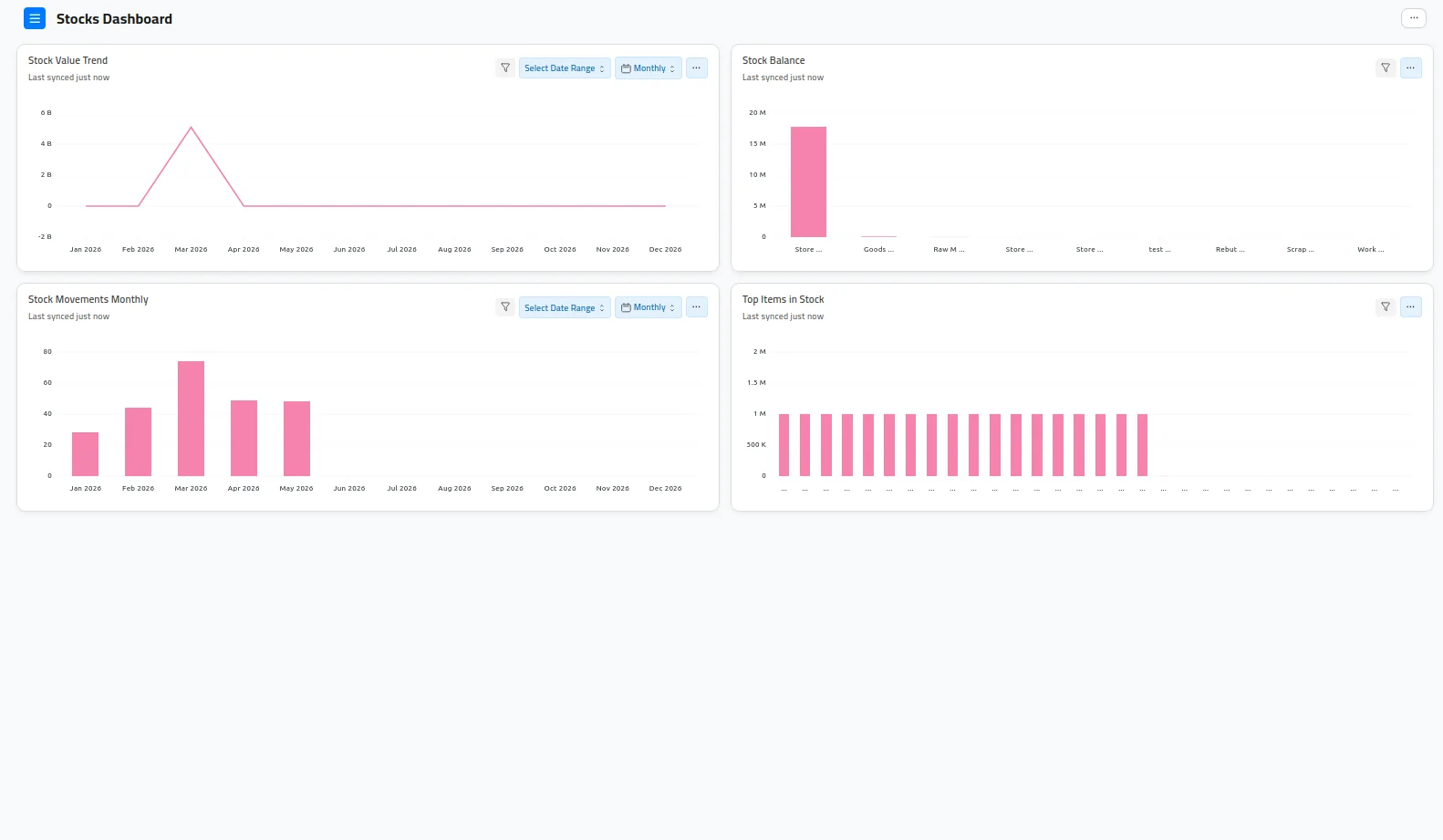
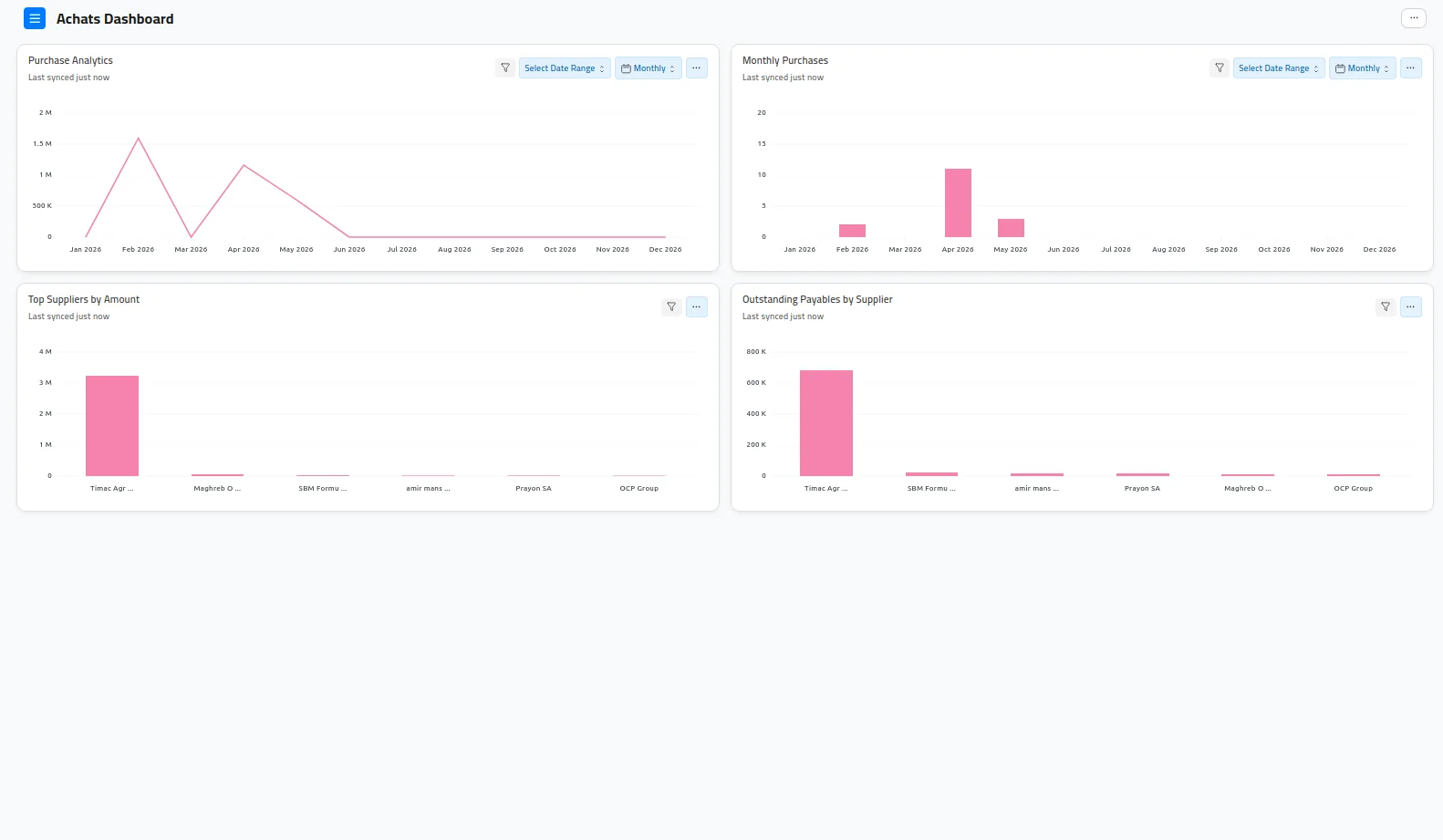
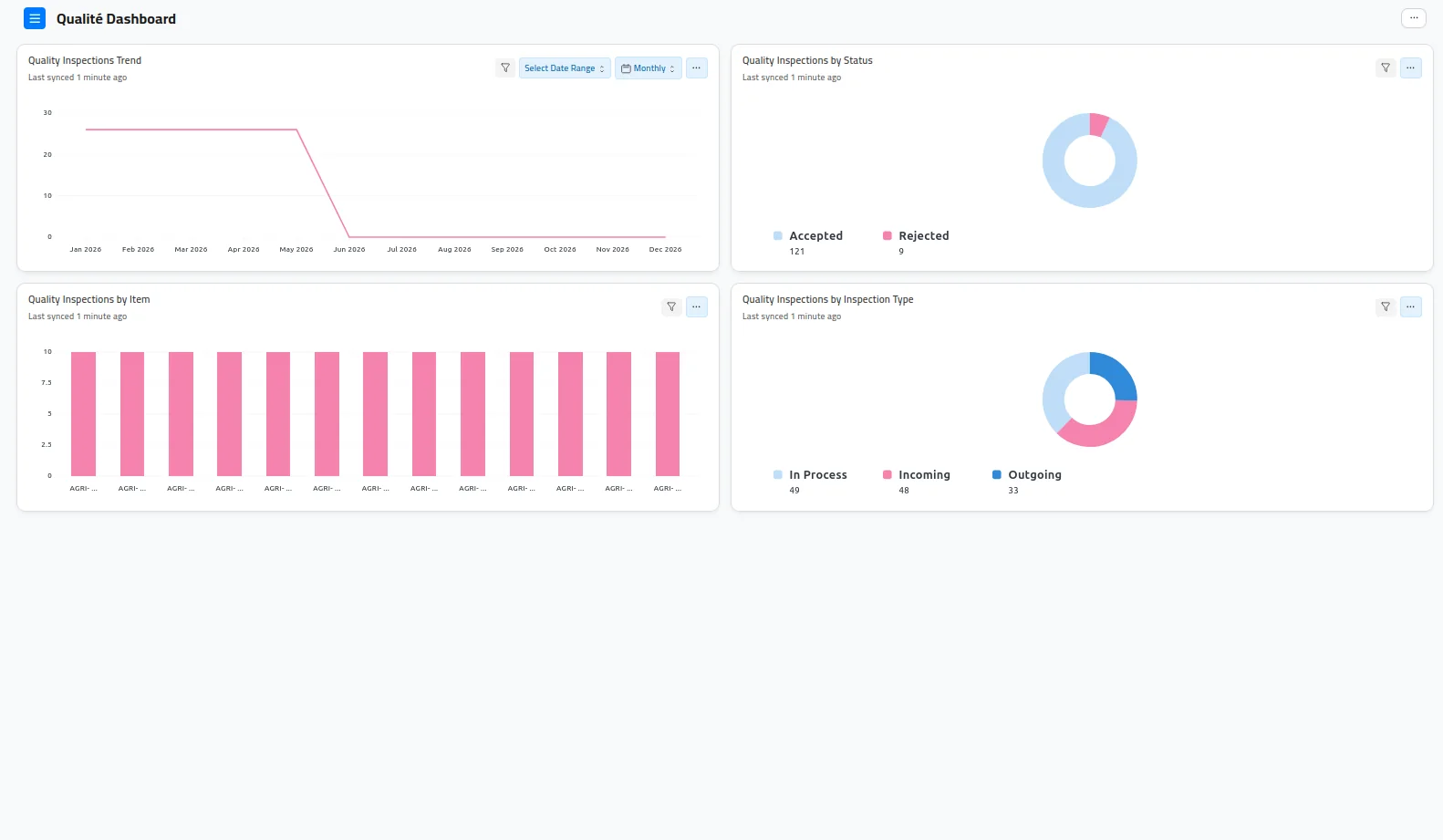
The sales dashboard shows orders in progress, sales for the month, top clients and receivables still to collect. The finance dashboard follows payments, due dates and profitability. The director reads the same figures as the team, because they come from the same documents, and a project’s margin can be checked while there is still time to do something about it.