Tracking a construction site's cost before the work ends
A construction site's margin often shows at the end. Budget from the quote, purchases and stock charged to the site, progress bills: how FlexiERP tracks it.
The site manager calls the yard: site B is short of cement. The yard loaded a truck last week, but which site it went to is written only on a paper slip still lying in the cab. Back at the office, the accountant receives a supplier invoice with no site reference and files it wherever it seems to fit. As for whether site B made money, management will find out once the last invoice is in, often months after the client has accepted the work.
Nobody in this story is doing a bad job. The information exists, each piece of it in a different place.
Why a site’s margin arrives too late
The costs of a site travel by different routes and on different timetables. Materials ordered for one site end up on another. A load leaves the yard without being recorded. The supplier’s invoice turns up a month after delivery, the subcontractor’s later still. Meanwhile the quote that won the contract sits in a folder, and nobody compares it with what is actually being spent.
Revenue is no better. Progress gets reported over the phone, the progress bill goes out late, and the client pays late as a result. By the time everything has been pulled into a spreadsheet, the site is finished and there is nothing left to correct.
One site, one project, one budget
In FlexiERP every construction site becomes a project. The signed contract opens it, with its client and its budget. The quote, built from the measured quantities, becomes the site budget with no retyping. The budget is set by account and by project and followed month by month: actual against budget, with the variance.
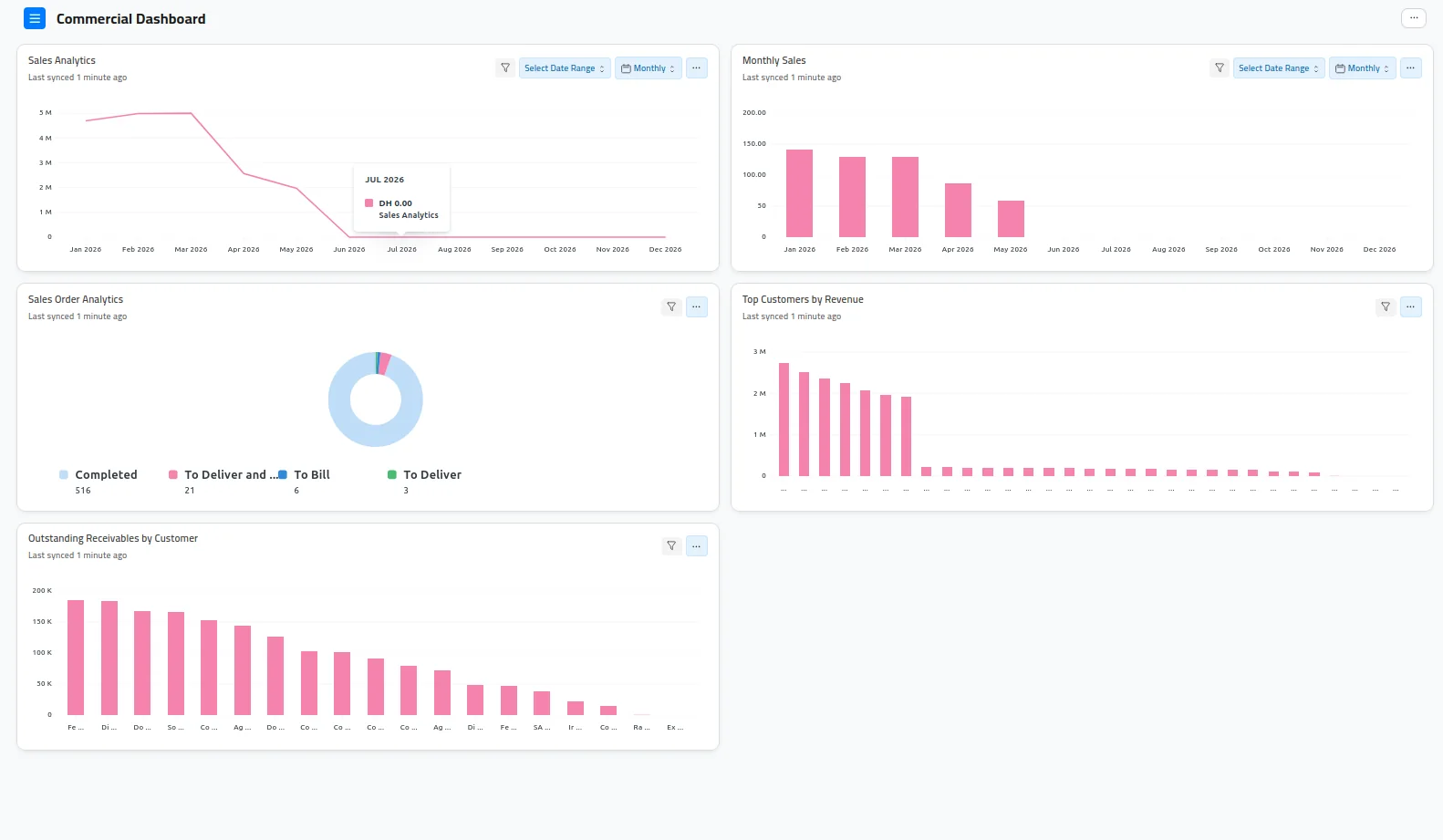
From there, every department’s documents carry the same project: purchase order, stock movement, delivery note, invoice. People keep working in the screens they know, and the figures meet in one place without anyone copying them across.
Purchases and yard stock charged to the right site
The site supervisor raises a material request. The buyer turns it into a purchase order that carries the project, and when the supplier invoice is booked, the material cost rolls up to the site. Above a threshold the company chooses, the order goes through an approval path before it is sent.
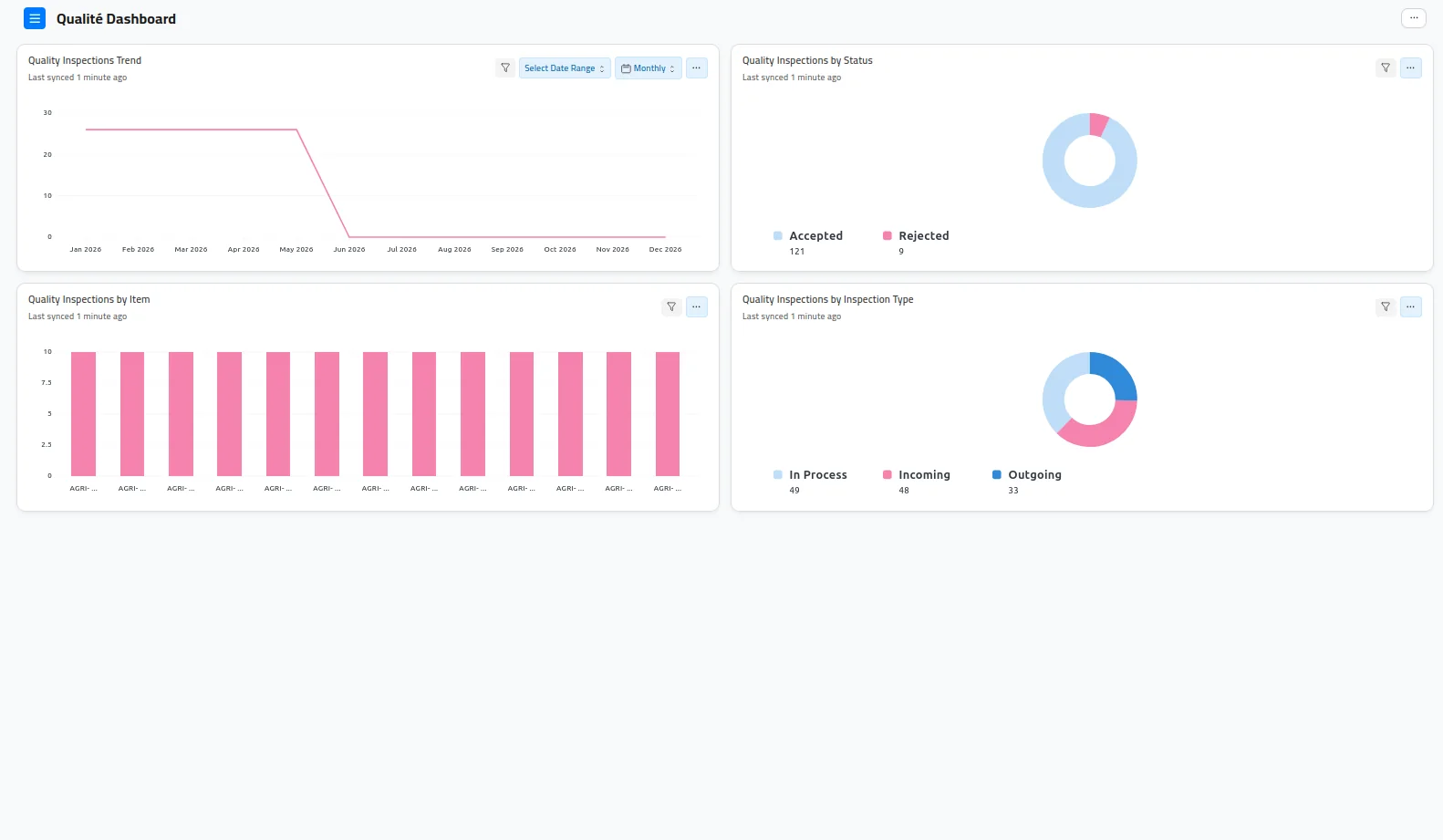
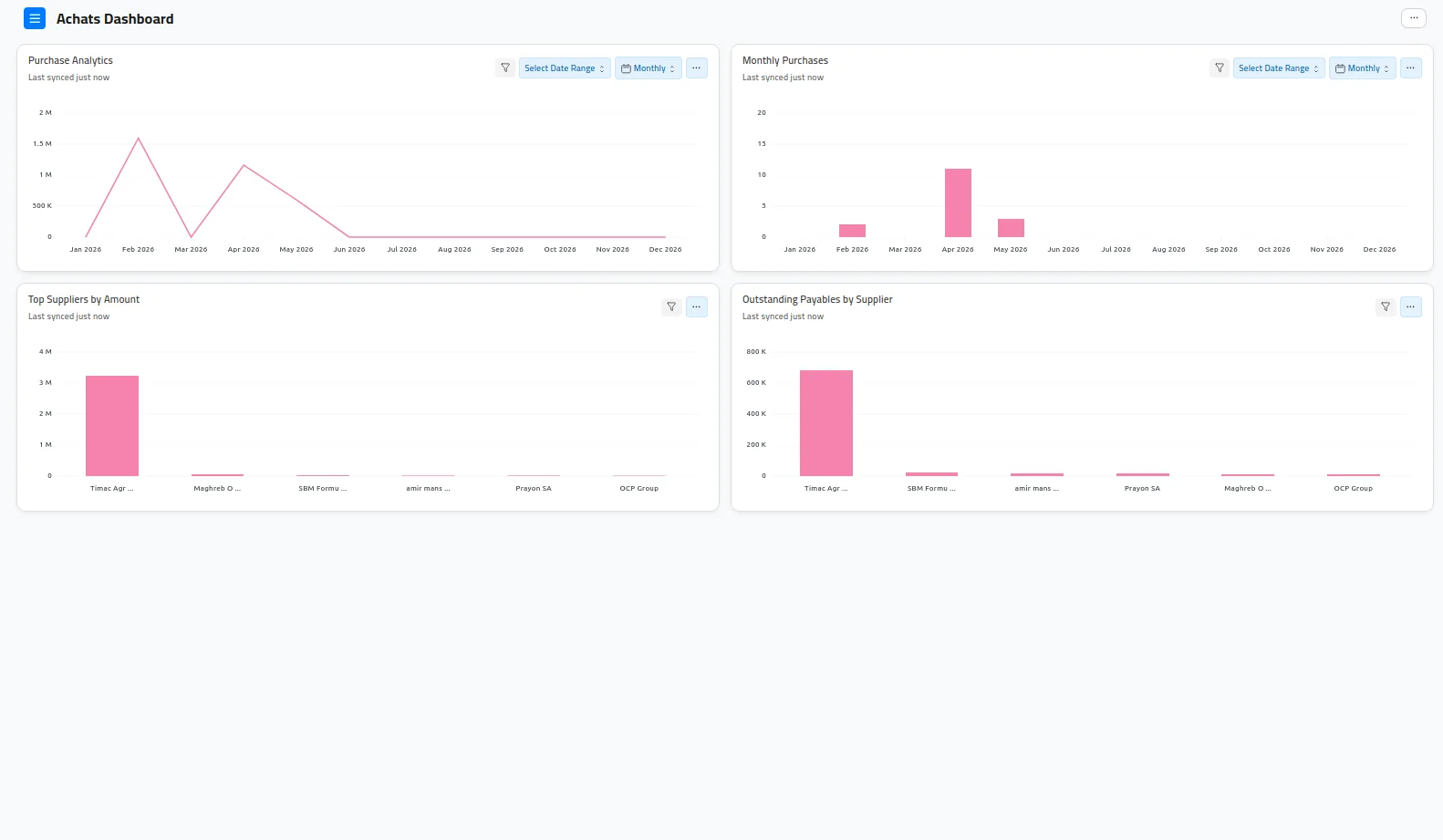
The yard works the same way. Issues and transfers between warehouses carry the project and the cost centre, so the yard knows what goes to which site. Finding site B’s cement no longer depends on a paper slip, and the purchasing dashboard shows spending by category and the orders still pending.
Progress, progress bills and margin
Progress is entered on site and counted in the site’s costs. Progress bills start from the real progress: the invoice follows the client’s order in instalments, and the order shows the percentage already billed. An invoice can have several due dates, and partial payments are tracked. Payment terms can be split by percentage, for example 30 % on order, 50 % on delivery and 20 % on acceptance, and retention money has its own account.
The site margin then works itself out: what has been billed on the project, minus the costs attached to that same project. It can be read day by day, while there is still time to act on it.
To the tax administration, a progress bill is an invoice like any other. It already has to show the client’s ICE, VAT stated separately and a number in a continuous series. The DGI has announced, pending its decree, electronic invoicing: a model in which every invoice is checked by its platform before it reaches the client; the calendar will be set by the decree. A progress bill drawn from recorded progress, with a complete client record and VAT applied from the tax template, leaves with clean data. FlexiERP keeps that data structured and complete, and FlexiGlob sets up the connection with the tax platform as part of the deployment, once the format is published.
All of this asks for some discipline on site: progress entered late gives a margin that is late too. Each trade also has its own billing habits, and since FlexiERP is not delivered as fixed software, those rules can be built as extensions around the core.