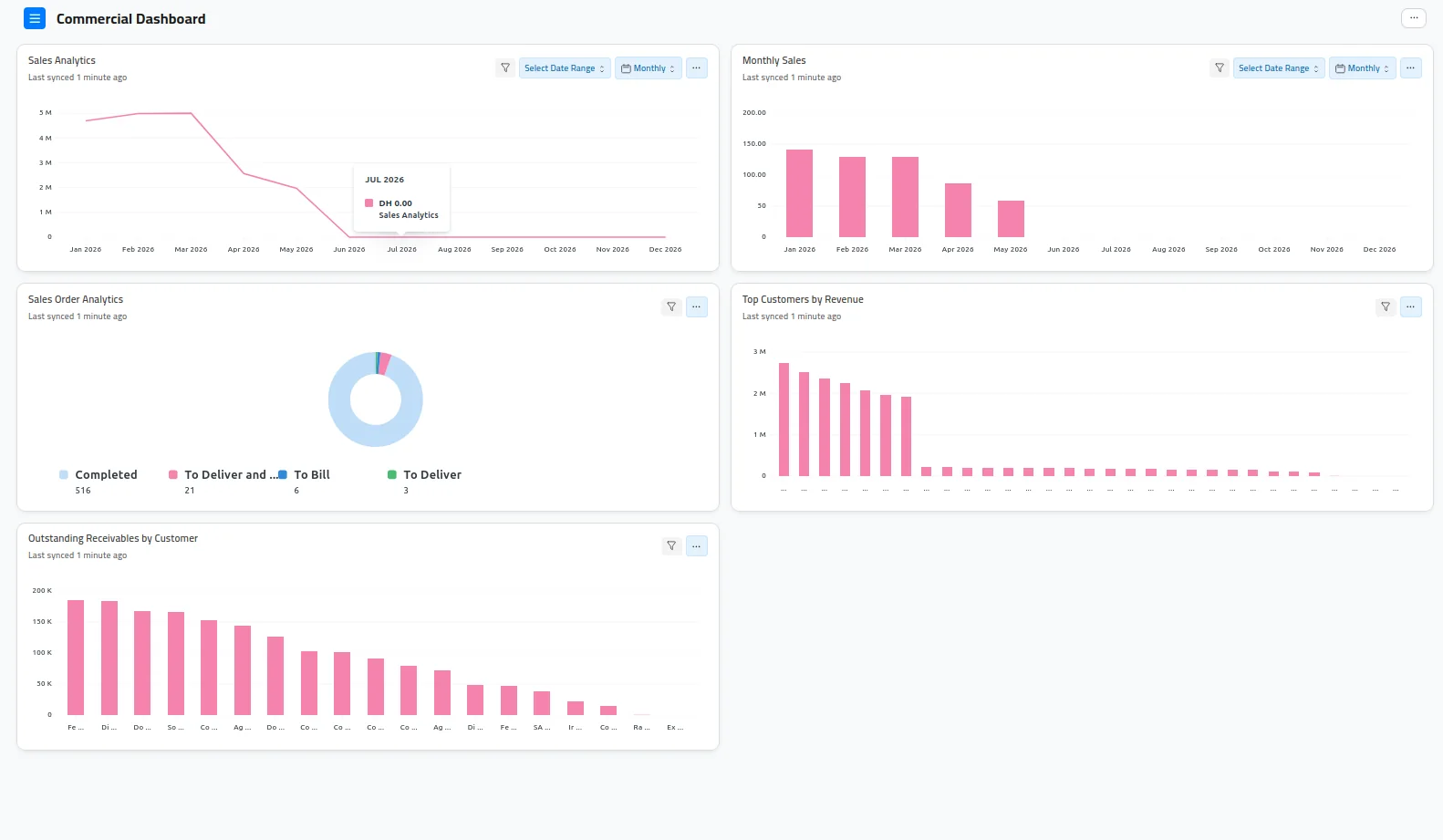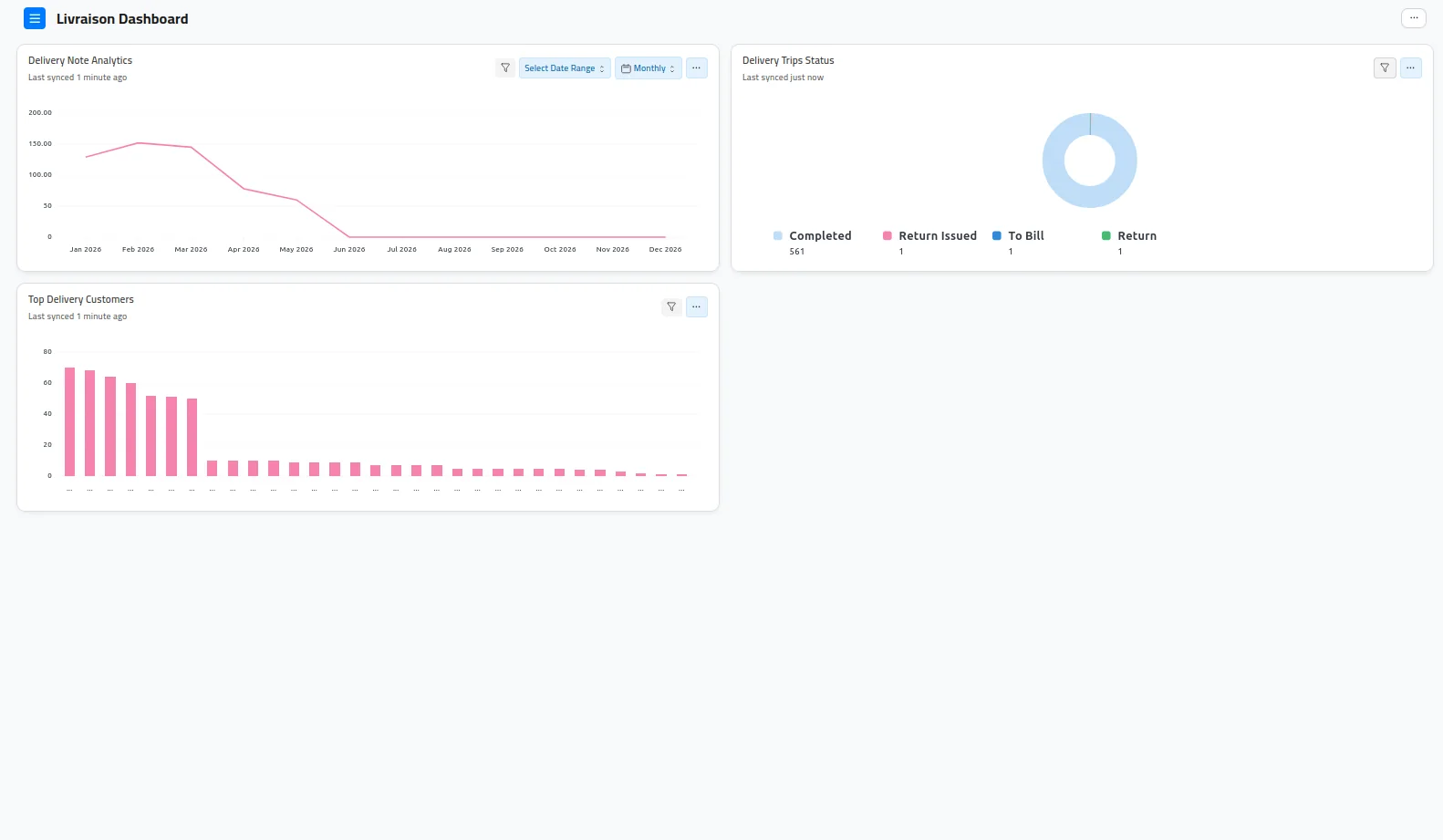
Profitable but short of cash: where the gap comes from
A company can make a profit and still run short of cash. Profit and receipts, due dates, unpaid invoices, receivable ageing: what FlexiERP lets you follow.
The accountant walks through the quarter: income is well above expenses and the result is positive. The director nods, then glances at the bank statement lying next to the report. Salaries are due in ten days, a supplier has chased payment twice, and the balance will not cover both. How can a company that makes money be short of it?
Because profit and cash do not measure the same thing, and they do not measure it at the same time.
Profit counts invoices, the bank counts payments
The income statement records a sale on the day it is invoiced. The bank only sees it on the day the customer pays, often weeks later. In the other direction, material bought and paid for today only enters the cost of sales when the finished product is sold. As for the VAT you collect, it passes through your account without being yours: it is owed to the State.
Take one month, with invented amounts. The company invoices 500 000 dirhams and carries 420 000 dirhams of expenses, a profit of 80 000 dirhams. But its customers paid only 300 000 dirhams during the period, and it paid cash for the material for its next order. On paper it was a good month. At the bank it cost money.
There is nothing unusual in that gap. It becomes dangerous when nobody sees it coming, and it grows with the business: the more you sell on credit, the more money you advance to your customers.
Where the money is waiting
In an SME, the missing cash usually sits in unpaid customer invoices, especially the ones that passed their due date without anyone chasing them. It also sits in stock that has been bought and paid for but not yet sold. And it leaks out when suppliers are paid faster than customers pay.
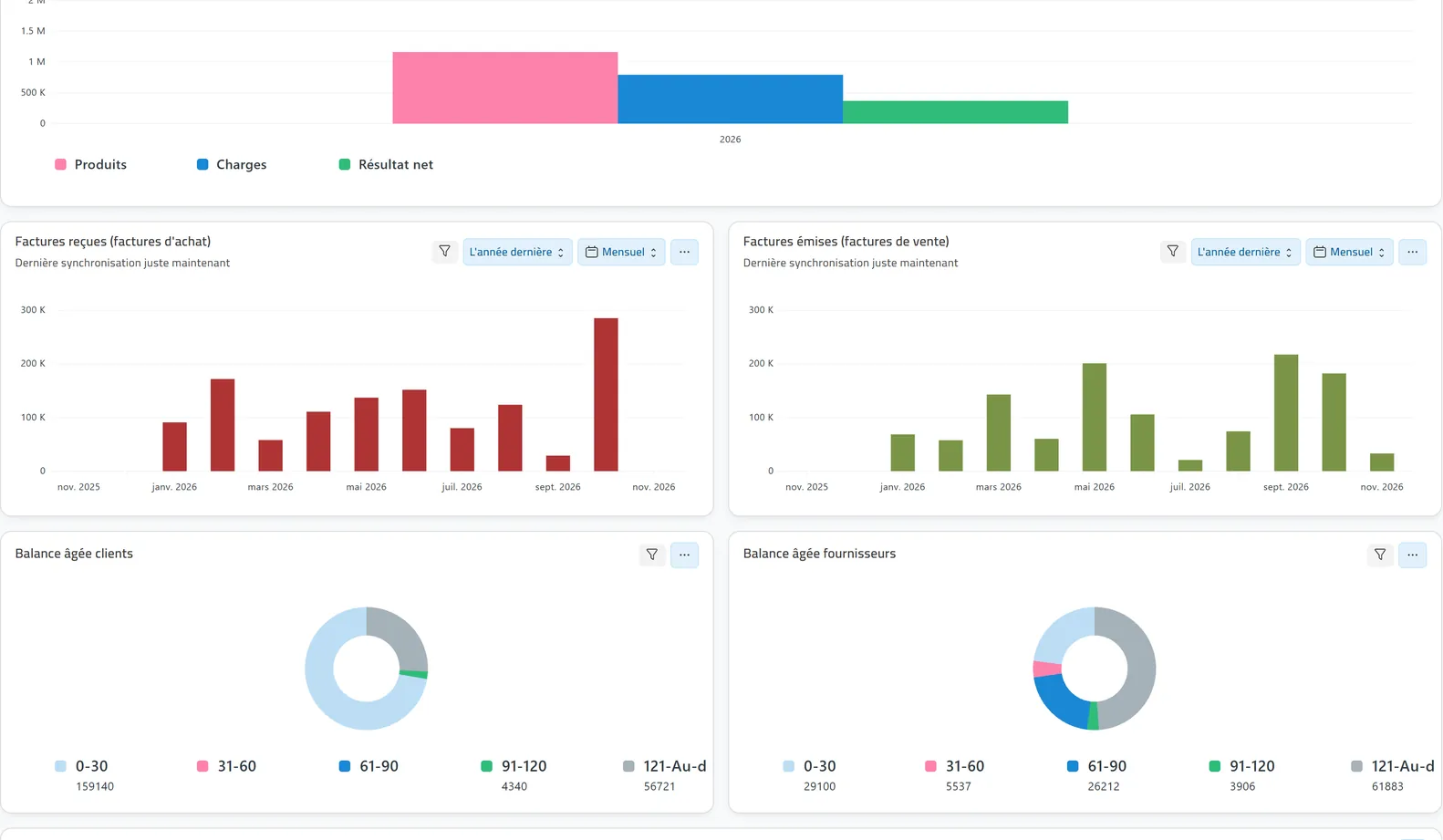
The tool that makes unpaid invoices readable is receivable ageing. It sorts what each customer owes by the age of the debt: up to 30 days, 31 to 60, 61 to 90, 91 to 120, and beyond. An invoice at 45 days calls for a different action from one at 150 days, and a customer whose balance slides into the next column every month is sending a signal well before the invoice goes properly bad.
E-invoicing and the payment date
The payment term runs from the invoice. An invoice validated and sent on the day of delivery starts the clock; an invoice typed up at month end, or redone because the ICE was missing, pushes it back by just as long. Under the e-invoicing model announced by the DGI, pending its decree, each invoice would be checked by the tax platform before it reaches the customer, and a wrong invoice would simply not go out. In FlexiERP the invoice is created from the delivery note, with the customer record, VAT and numbering already in place, so it can leave the same day.
What FlexiERP shows
In FlexiERP the invoice carries its payment terms, with one or several due dates, and a partial payment is tracked on the invoice itself. When the money arrives, the payment entry is linked to the invoice, matches it and marks it paid. The list of unpaid invoices is therefore the one in the accounts, not a spreadsheet kept on the side. A reminder can go out by email before the due date.
The finance dashboard puts income, expenses and net result side by side, with invoices issued and received month by month, and the customer ageing next to the supplier ageing, in the same brackets. Profit and the money still waiting are read on the same screen.
Management adds cash monitoring on top. It can receive an alert when a customer goes over their credit limit, and FlexiERP then refuses that customer’s new orders unless the finance director makes an exception. Reports, receivable ageing among them, can also arrive by email every week, which leaves time to call a customer before their invoice moves into the next column.