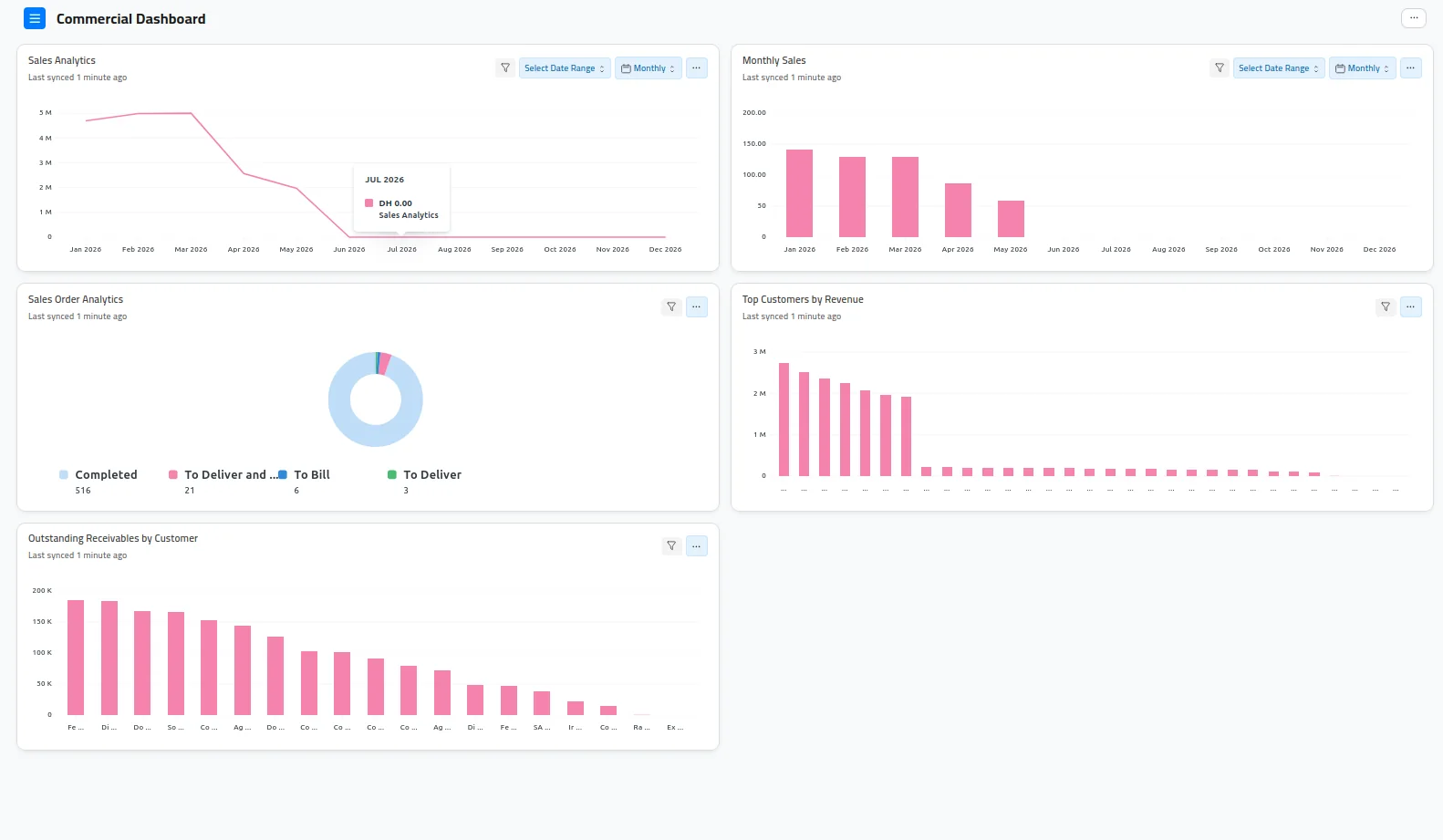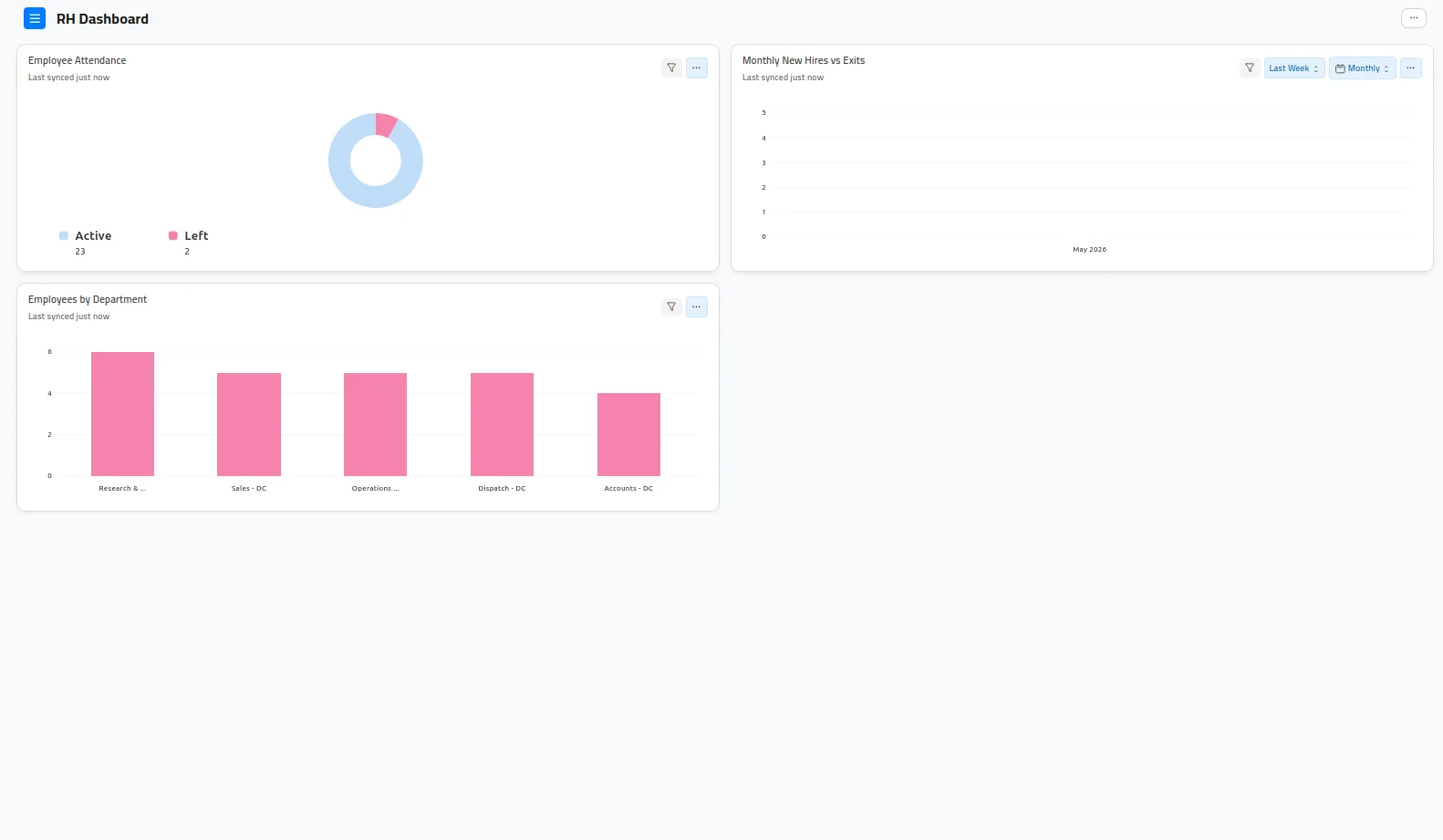
Running your ERP in dirhams, with your teams in Arabic
Moroccan accounting, VAT, CNSS payroll, Arabic screens, euro suppliers: what a Moroccan company should expect from its ERP, and what FlexiERP sets up.
Your accountant keeps a side file because the system cannot quite follow the Moroccan chart of accounts. A workshop supervisor who thinks in Arabic clicks through screens in another language and asks a colleague when in doubt. A supplier invoice arrives in euros, and someone converts it by hand on the corner of a spreadsheet.
None of these will stop a company from running. They do cost it, a little every day, and they push people back towards the files the ERP was supposed to replace.
What Moroccan accounting asks of the system from the first day
A finance director has a simple test: does the application already speak the language of the accounts, or does someone have to teach it? When local rules are fitted afterwards, the gaps tend to be discovered at closing, which is the worst moment to find them.
In FlexiERP, Morocco is ready out of the box:
- the Moroccan chart of accounts (PCGE);
- VAT;
- amounts in dirhams;
- payroll with CNSS.
The chart of accounts, taxes, currency and fiscal year are set at setup, so there is nothing to adapt afterwards. Your people start from a structure they recognise, and an accountant reading an entry finds the accounts they already use.
Arabic decides who really uses the system
Language tends to be treated as a detail in ERP projects. On the shop floor it is often what decides whether a screen gets used. A storekeeper who has to translate each label in their head will go slower, make more mistakes, and return to the notebook at the first opportunity. When that happens, the company has paid for a system and still depends on paper at the point where the data starts.
FlexiERP comes in French, Arabic and English, and the Arabic version reads from right to left as it should. A management team working in French and a workshop working in Arabic use the same application, and they are looking at the same records.
Documents are a separate question, and one worth raising early. Your delivery notes, your invoices and your internal forms have their own habits. Custom extensions exist for this: your rules, your documents and your calculations become functions of your ERP. Going through them in the workshops with each department is the way to avoid surprises later.
Dirhams at home, euros and dollars at the door
An industrial SME in Morocco can easily buy raw materials in one currency and sell in another, while paying its staff and its taxes in dirhams. When conversions are done by hand, each one is a small opportunity for a gap, and the margin on a contract becomes hard to read.
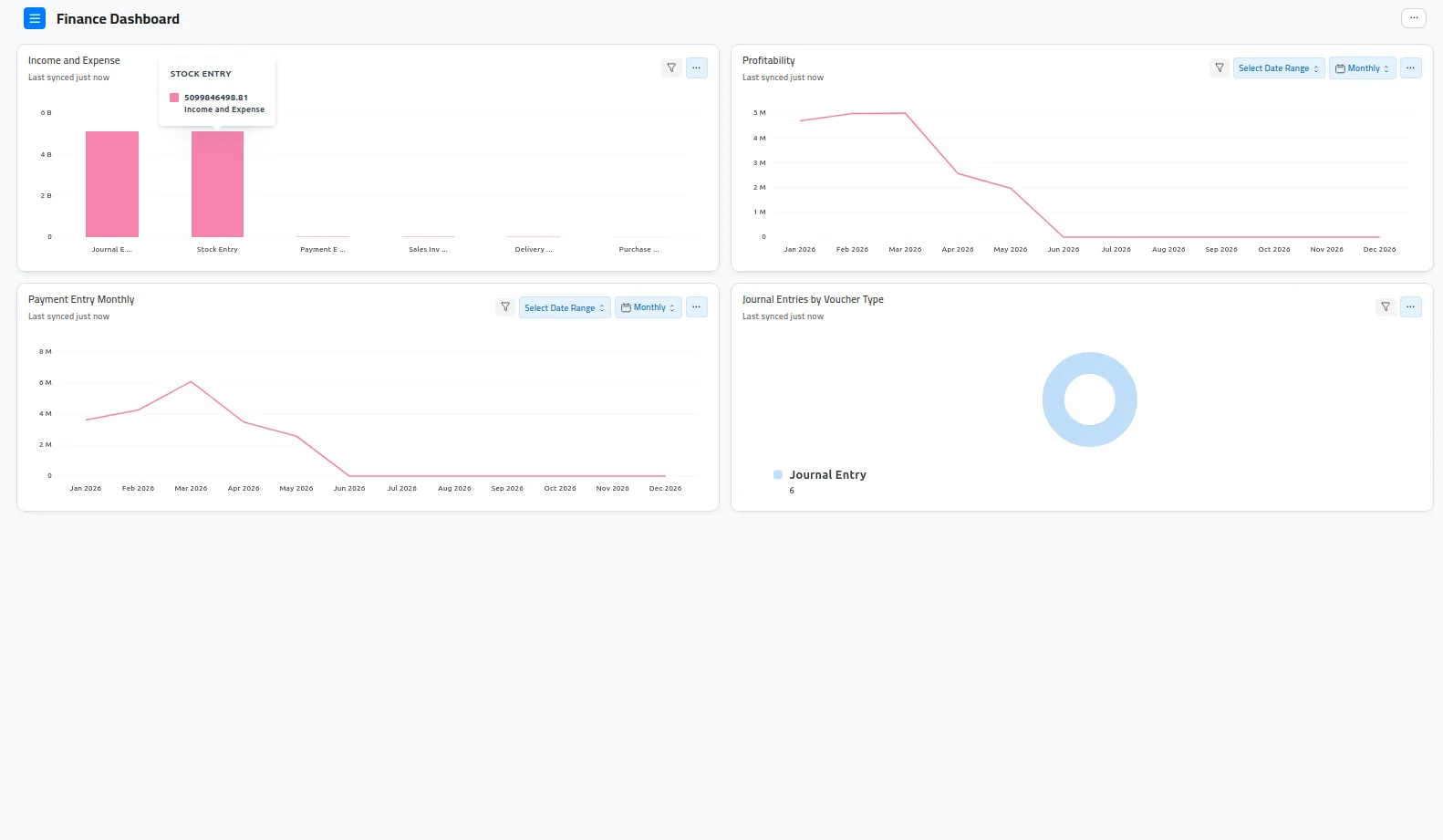
The application handles several currencies, for example dirhams, euros and dollars, with their exchange rates. If you run several sites or several companies, that is also covered, and you do not have to keep a separate setup for each.
And if our accountant stays on their own software?
This happens often, particularly when an external accountant has their own tools and has no plan to change them. FlexiERP can export third parties, invoices and payments to the accountant’s software, after a feasibility study. That study matters, since the export has to fit the software on the other side, and it is better to know the answer before you count on it.
Biometric time clocks are the same kind of connection at the other end of the company. Their readings come up into attendance, with nothing to retype, so payroll people have one less file to chase.
The application itself needs only a web browser, on a computer, a tablet or a phone. A supervisor can check something from the workshop floor, in Arabic, on a device they already know how to use.