Why your company's spreadsheets end up disagreeing
Sales, stock and finance bring different figures to the same meeting. Why files drift apart even with careful people, and what shared data changes.
The management meeting starts with a simple question: how did the month go? Sales has a figure. Finance has another. The head of operations has a third, taken from a file updated on a different day. The next half of the meeting is spent working out which is right, and the decisions wait.
Most directors have sat through this. It is tempting to blame somebody’s rigour, but the people who keep these files are usually careful. The drift comes from how spreadsheets work.
A spreadsheet is a private copy
A spreadsheet holds what its owner put in it, at the moment they put it there. It has no link to the warehouse or to the invoice that went out this morning. To stay correct, someone has to copy the news into it by hand, and that person also has a job to do.
So each file carries its own date. The sales file was last touched yesterday evening, the stock file on Friday, and the accounting figures stop at the last entries posted. All of them can be accurate for their own moment and still disagree. Add the question of what each file counts. One department counts a sale when the order is confirmed, another when it ships, a third when it is invoiced. They use the same word for three different things.
Why the gap keeps growing
Spreadsheets also multiply. A copy is emailed for a meeting and gets corrected on the way, and then there are two. A formula is changed in one version and not the other. The person who built the file changes jobs, and the people left behind stop touching the parts they do not understand.
History is the other weakness. When a figure changes, an ordinary file does not tell you who changed it or why. In a dispute, people end up piecing together who did what from emails and memory.
None of this is a reason to look down on Excel, which is a good tool for working out a calculation. It runs into trouble when a company uses it as the shared memory of its operations.
“We already have an accounting package”
Many companies answer the problem this way, and the package does its job. It records what reaches it. But accounting comes at the end of the chain, so what it sees is late and has often been retyped from something else. It cannot tell the salesperson what is in the warehouse, or tell the workshop what to make.
That is the gap FlexiERP is built for. Sales, purchasing, stock, production, quality, accounting, payroll and HR share one application, so a sale is entered once and the stock, the accounting and the dashboard follow from that single entry. The versions have nothing to drift apart from, because there is only one.
If your accountant keeps working in their own software, third parties, invoices and payments can be exported to it, after a feasibility study.
What a meeting looks like with one set of figures
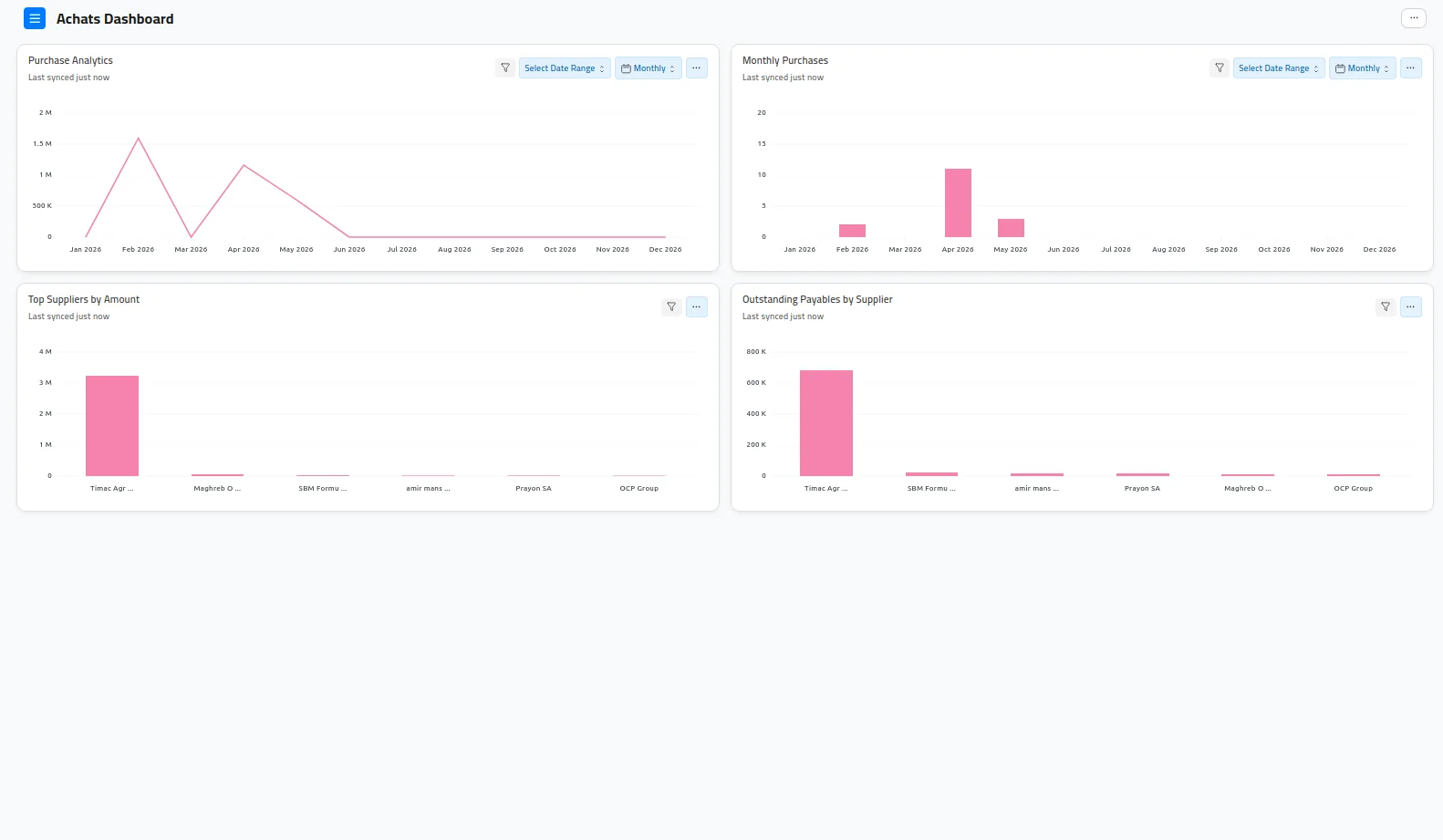
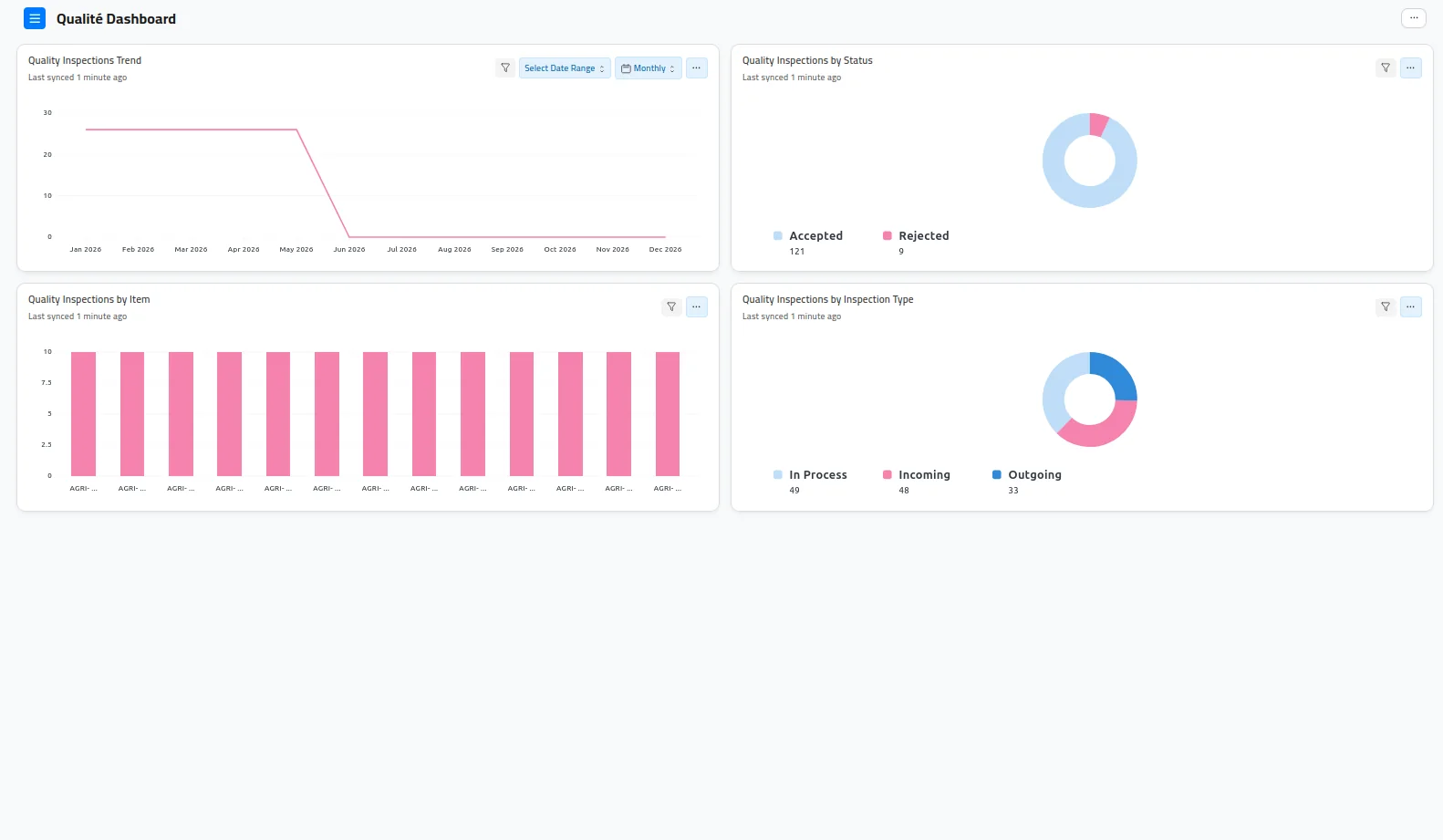
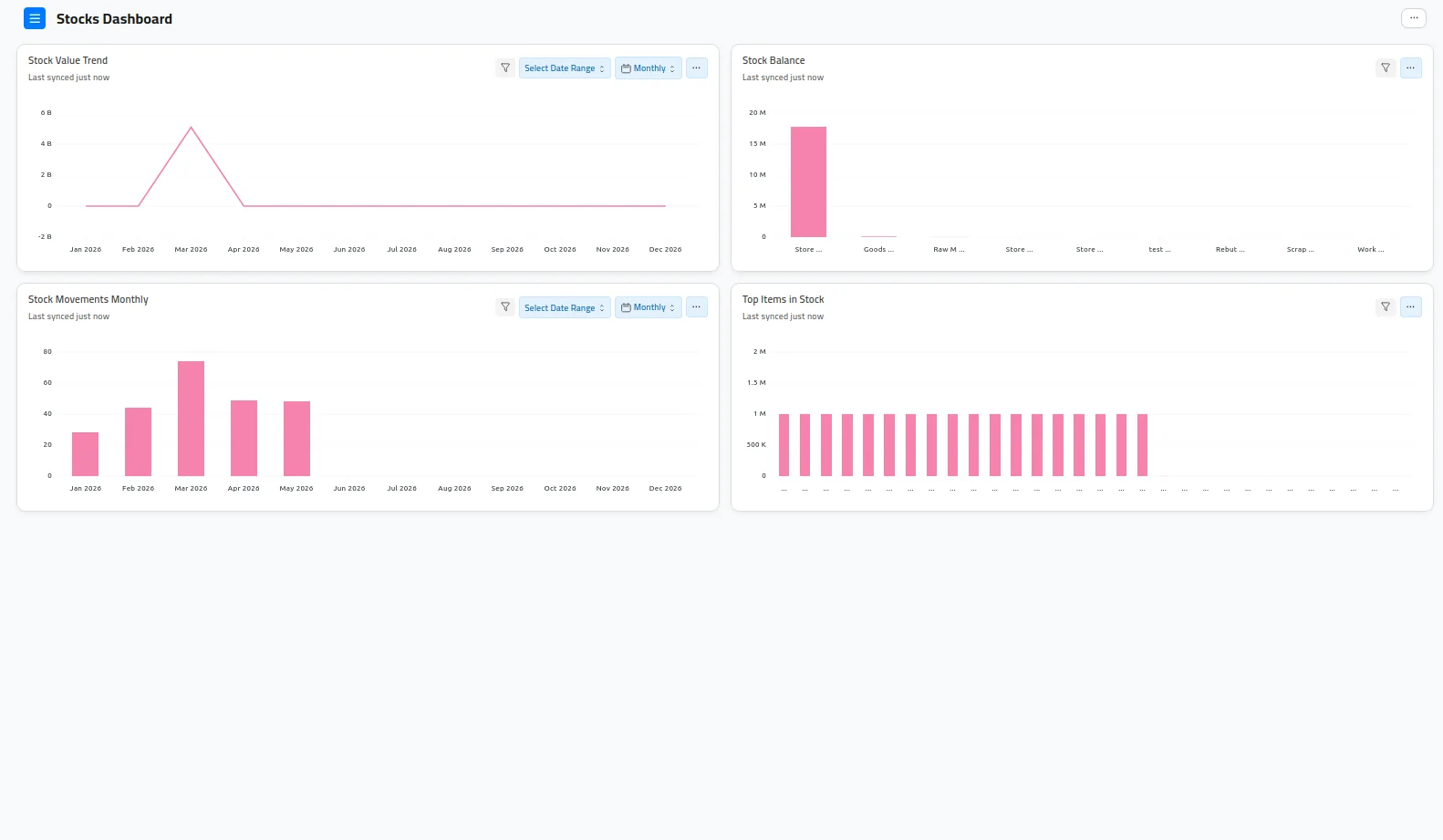
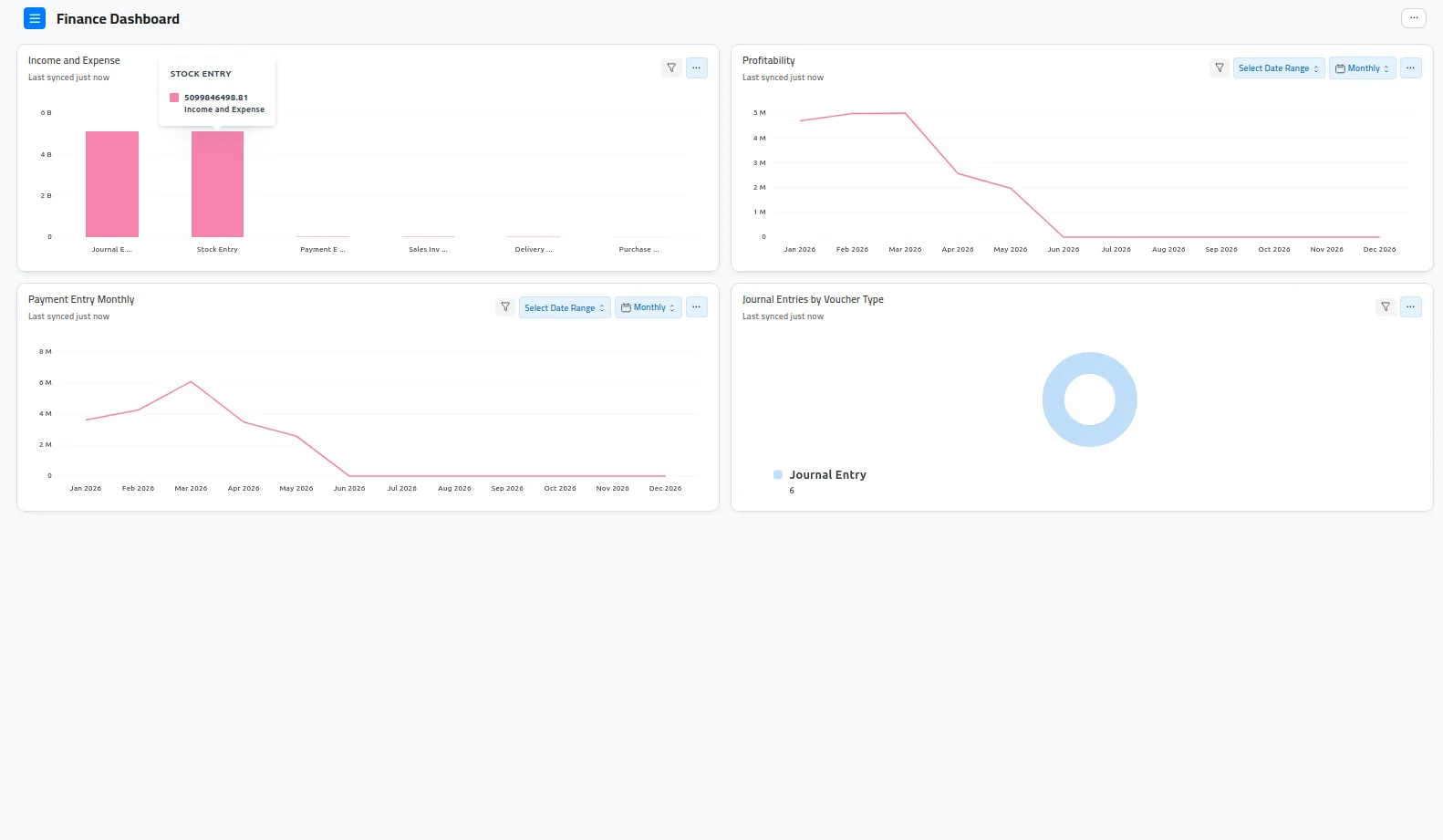
Every department has its own dashboard: sales, purchasing, stock, production, quality, delivery, finance and HR. Each shows what that department needs. Finance reads income and expenses, payments, due dates and profitability, while stock reads the value held per site and the items below their threshold. They differ in what they display and agree on the numbers, because they all read the same data. Management gets a consolidated view on top.
So the opening question gets a different treatment. Comparing three files in a meeting gives way to looking at the same dashboard, together. The director who used to call the accountant for the month’s figure opens the screen. An alert can flag a crossed threshold, which beats finding the surprise at closing.
The discussion does not get easier for that. A poor margin is still a poor margin, and people will still argue about what to do. They just start arguing about the decision, with the same number in front of everyone. And when someone asks who changed a figure, the audit trail has the answer.